Dnsys Z1 Knee Exoskeleton Review: Is It Worth the Hype?


I’ll admit, when I first heard the bold claims about the Dnsys Z1 knee exoskeleton, I thought it sounded like a gimmick straight out of a sci-fi video game. A consumer-grade wearable device that promises to take 77 pounds off your knees and make you feel noticeably lighter while hiking? As an avid outdoor enthusiast who constantly battles knee pain on steep downhill trails, I was naturally skeptical—but entirely eager to put it to the test. Let’s dive into what makes this device tick.
Pros & Cons
- ✅ Incredible Power-to-Weight Ratio: At just 1.5 lbs per leg, the 900W dual motors deliver massive assistance without feeling bulky.
- ✅ Downhill Joint Protection: Actively offloads immense pressure from the knees during steep descents, eliminating typical post-hike soreness.
- ✅ Kinetic Energy Recovery System (KERS): Intelligently recharges the hot-swappable batteries while walking downhill, significantly extending range.
- ❌ Software Learning Curve: The AI excels at rhythmic walking but can occasionally hesitate during unpredictable, chaotic movements like rock scrambling.
- ❌ App Experience: The companion app feels a bit unpolished and could benefit from a much cleaner user interface.
- ❌ Premium Investment: While early bird pricing is attractive, the future retail price tag makes it a serious financial commitment.
| Feature | Details |
|---|---|
| Motor Type | Dnsys DNA-1 Brushless Motor (900W Peak) |
| Weight | 1.5 lbs (680g) per leg |
| Torque Density | 50 Nm/kg |
| Reaction Latency | 0.01 Seconds via DNNAS AI |
| Battery Life | 3-5 Hours (Hot-Swappable + KERS Support) |
| Water Resistance | IP54 (Splash-proof) |
| Assistance Load | Offsets up to 77 lbs (35 kg) on knees |
My Experience
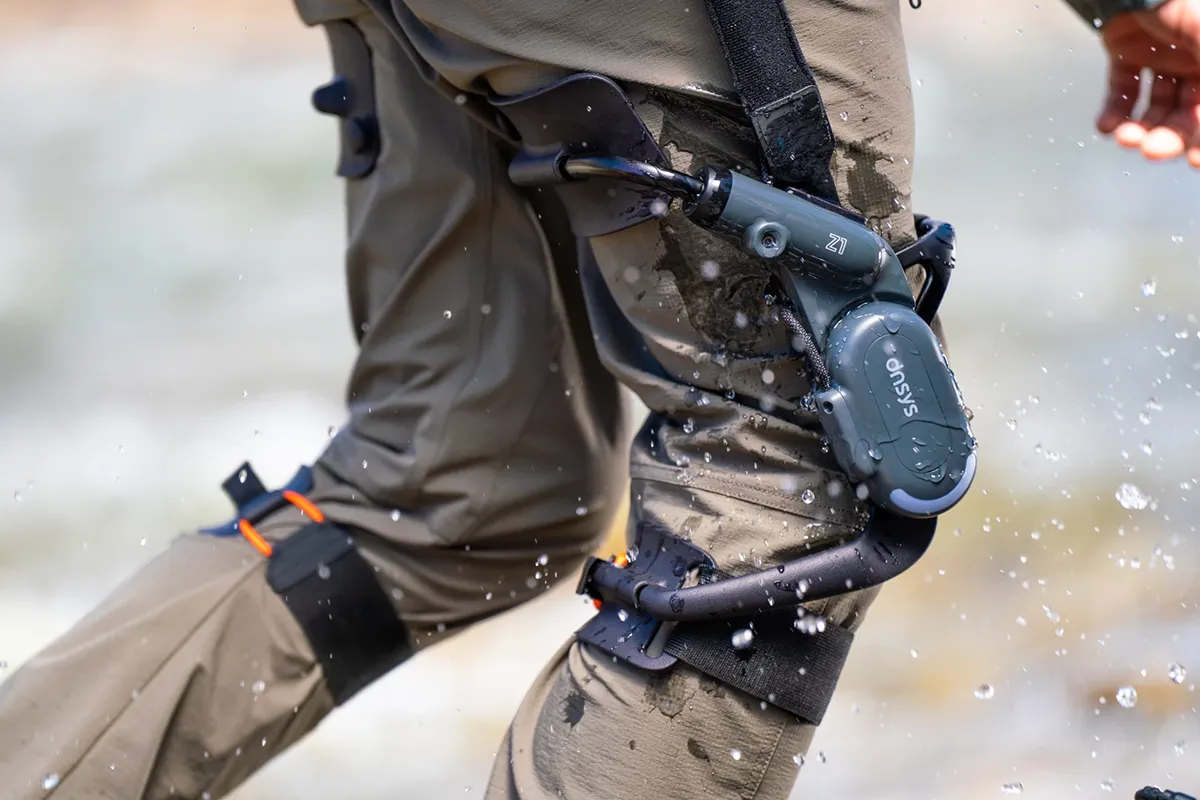
Unboxing the Dnsys Z1, the first thing that struck me was the sheer build quality. This isn’t some clunky, clinical medical device; it looks and feels like premium, modern outdoor gear. Utilizing aerospace-grade aluminum and carbon fiber, the hardware is incredibly sleek. Strapping it on took a bit of practice the first time around, but thanks to the flexible 3D-knitted fabric straps, I can now get suited up in about 15 seconds. It fits snugly over my standard hiking pants without feeling restrictive or cutting off circulation.
My first real test was a demanding 10-mile mountain trail with over 2,500 feet of elevation gain. As I started the ascent, the Z1’s DNA-1 motor kicked in almost instantly. The sensation is hard to articulate—it doesn’t do the walking for you like a motorized scooter. Instead, it acts like an invisible hand gently pushing your leg up with every step. The DNNAS (Dynamic Neural Network Assist System) AI adapts in milliseconds, meaning whether I was taking a long stride or a short, choppy step over a root, the torque matched my rhythm perfectly. I reached the summit with my legs feeling shockingly fresh.
However, the real magic happened on the descent. Downhill trekking is notoriously brutal on the joints, but the Z1 acts as an active shock absorber. By offsetting the pressure on my knees, it completely eliminated the usual burning sensation in my quads and the sharp pains in my patella. Plus, the Kinetic Energy Recovery System (KERS) actually recharges the battery while you walk downhill—a brilliant feature that extended my battery life well beyond the baseline expectations.
It’s not entirely flawless, though. While the AI is a masterpiece for rhythmic walking or hiking, it occasionally gets confused during “chaotic” movements, like scrambling sideways over loose rock formations. Sometimes the torque delivery would momentarily hesitate as the sensors tried to figure out my intent. Additionally, the companion app feels a bit basic and could definitely use a UI overhaul to match the premium nature of the hardware. Despite these minor gripes, the Dnsys Z1 has fundamentally changed how I approach the outdoors. It hasn’t just extended my range; it has given me the confidence to tackle trails I had previously written off.
Who is this for? / Alternatives
The Dnsys Z1 is ideal for avid hikers, alpinists, outdoor photographers lugging heavy gear, and individuals seeking to mitigate knee pain during vertical movements. If you want something strictly for hip assistance or medical rehabilitation, you might look at Dnsys’s own X1 or H1 models. Competitors like the Skip knee exoskeleton are entering the space, but currently run at significantly higher price points, making the Z1 the most accessible high-performance option on the market today.

Quick FAQ
Is it difficult to walk naturally while wearing the Z1?Not at all. The 0.01-second reaction latency means the motors move in sync with your natural gait. Within five minutes of wearing it, the assistance feels like a natural extension of your own muscles.
Can I wear it in the rain?The Z1 features an IP54 rating, meaning it is splash-proof and can easily handle light rain, snow, and sweat, but it should not be fully submerged in water.
How long do the batteries last?You can expect about 3 to 5 hours depending on your usage intensity. The ability to hot-swap batteries and the KERS downhill recharging greatly extends real-world endurance.
Dnsys Z1 Review
Product Images


You Might Also Like;